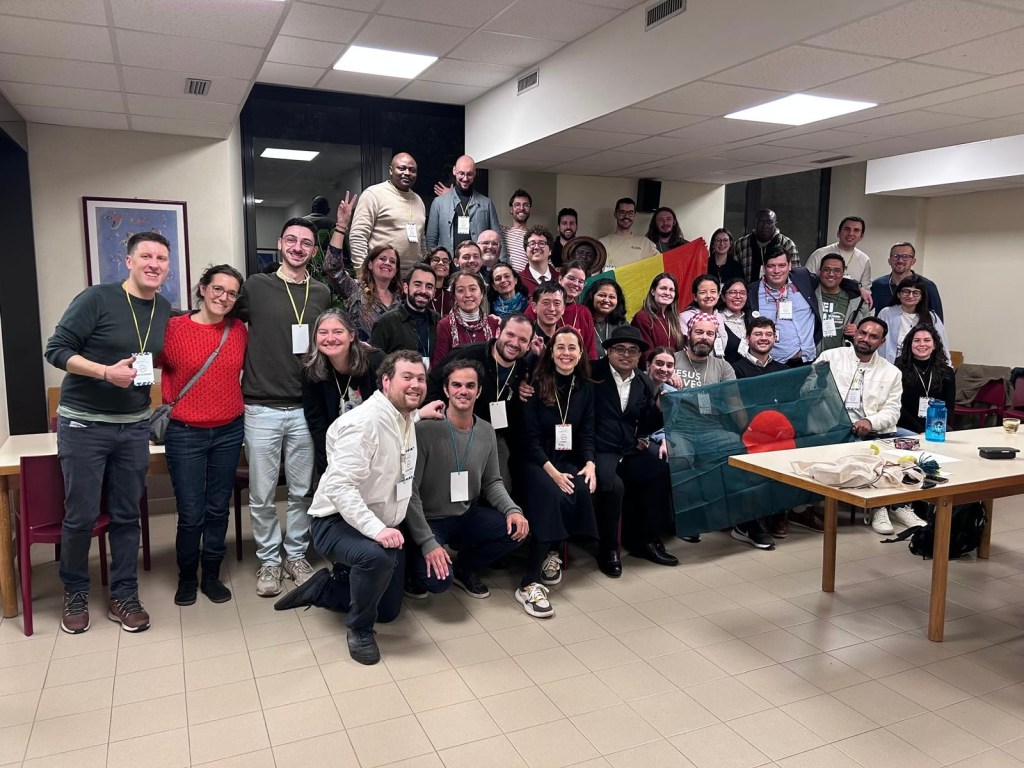
From 28 to 30 November, the second Economy of Francesco Global Event was held in Castel Gandolfo. People from all walks of life, committed to restarting the economy, gathered together, from chief executive officers who care about purpose, to professors rethinking the future of work and care in an age of artificial intelligence, to students with new ideas for building a better economy.
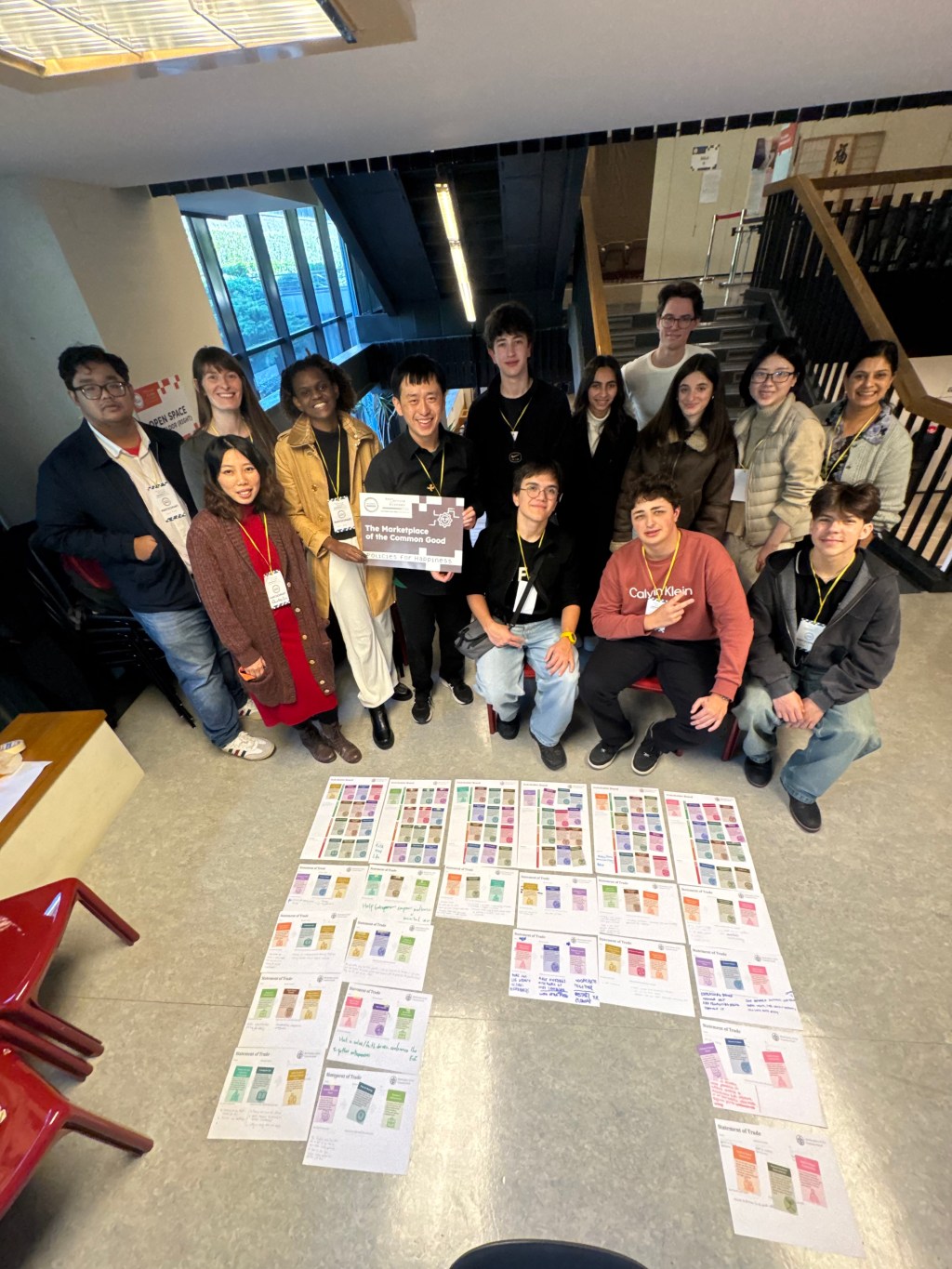
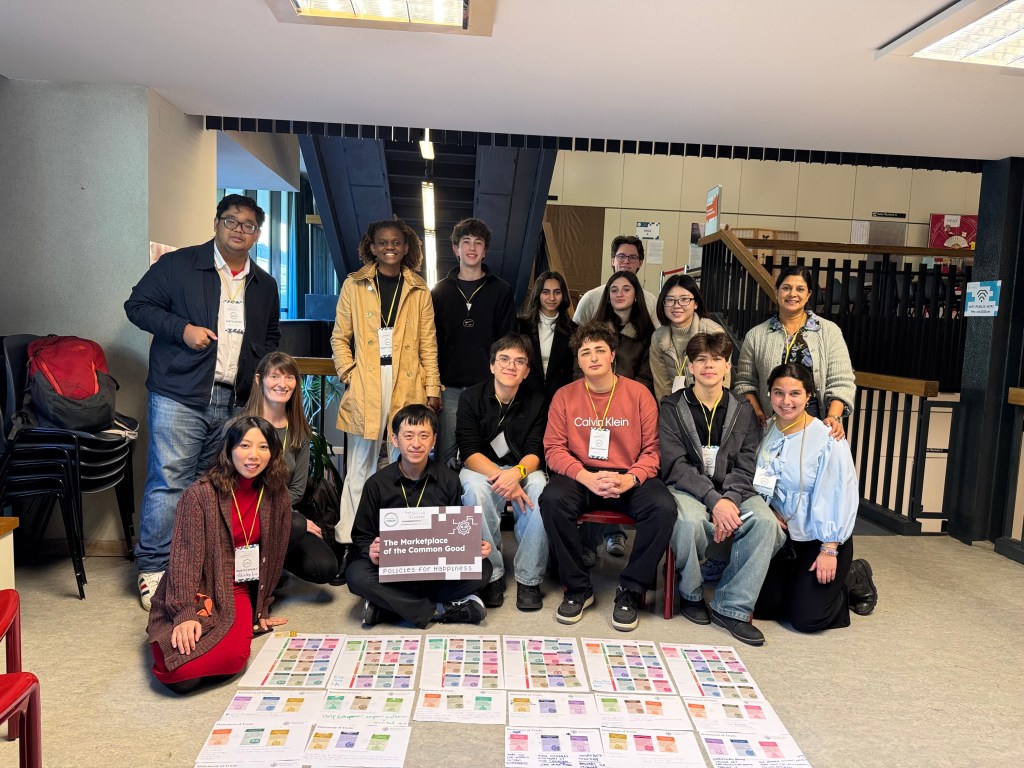
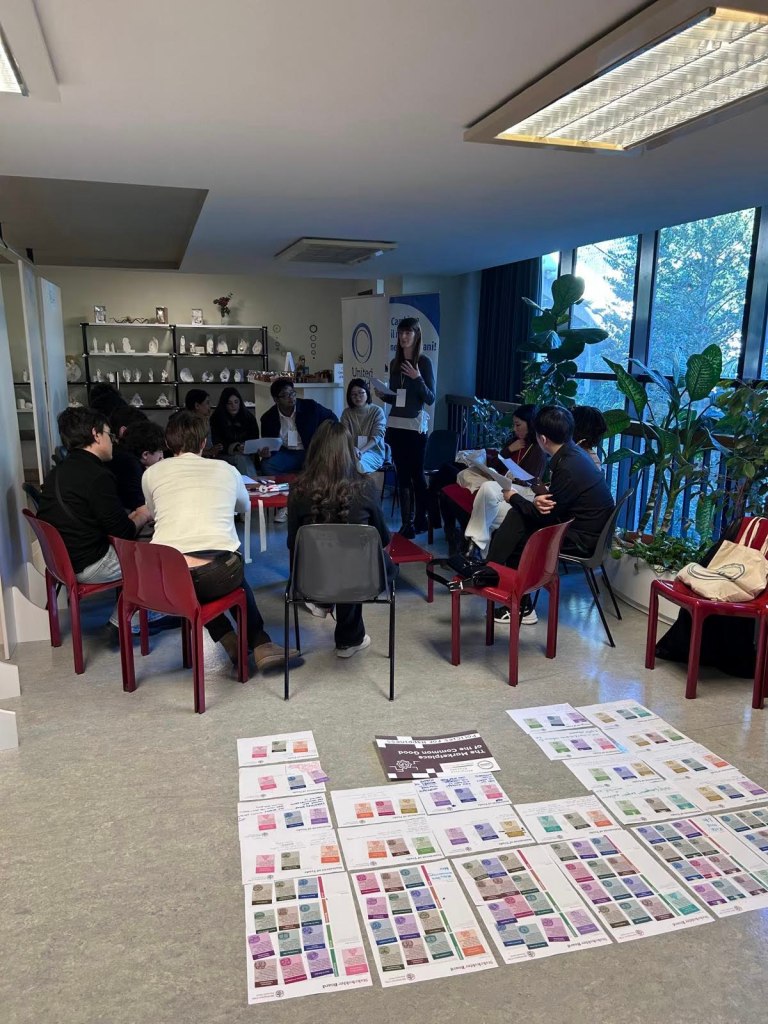
As the coordinator for Policies for Happiness, one of twelve thematic villages of the Economy of Francesco, for the Restarting the Economy global event, I developed, designed, and ran a workshop called the Marketplace of the Common Good. In this interactive workshop, participants took on the roles of different stakeholder groups and exchanged resources through negotiation. By working together, they identified key policies that could improve happiness for everyone. This resulted in what we called an Inclusive Map of Happiness, a shared plan for wellbeing.
The workshop took place on the second day and brought together fourteen people from ten countries across three continents. These included business owners running social enterprises, charity leaders, PhD students, and even schoolchildren.
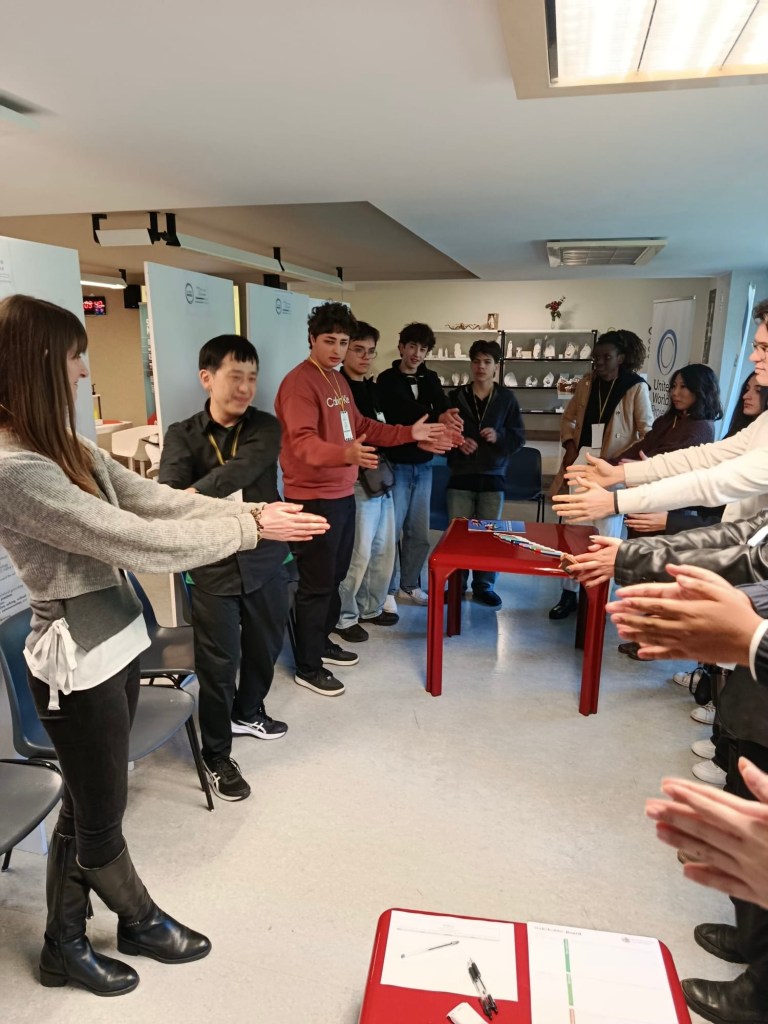
We began with a game of zip-zap-boing to introduce ourselves. Then, everyone formed teams, each representing a group of stakeholders, such as creative and cultural voices, or health, care, and education professionals. Each team were given twelve resources inspired by the academic literature behind policies for happiness. They discussed which resources their group excelled at and which ones needed improvement.
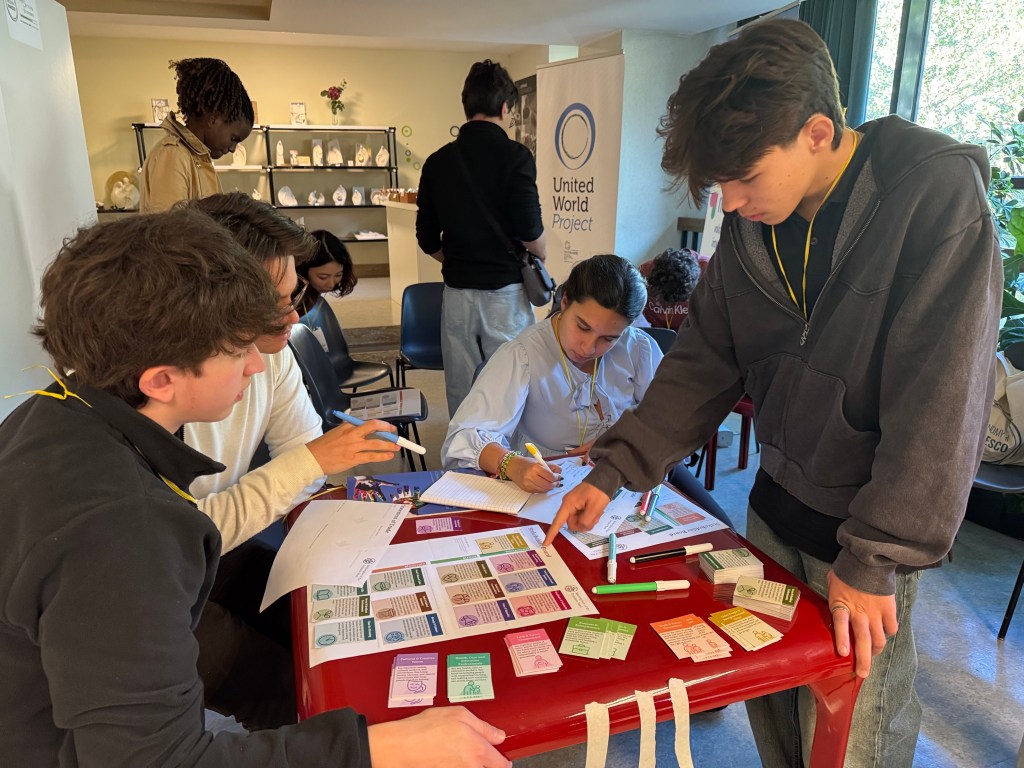
After this, negotiations began. Teams looked for ways to strengthen their weaker resources by working together. For example, our faith and values communities team realised they were not strong in beauty and culture, but the cultural and creative voices team had plenty to share. By inviting artists to showcase their work in places of worship, both teams found their happiness improved.
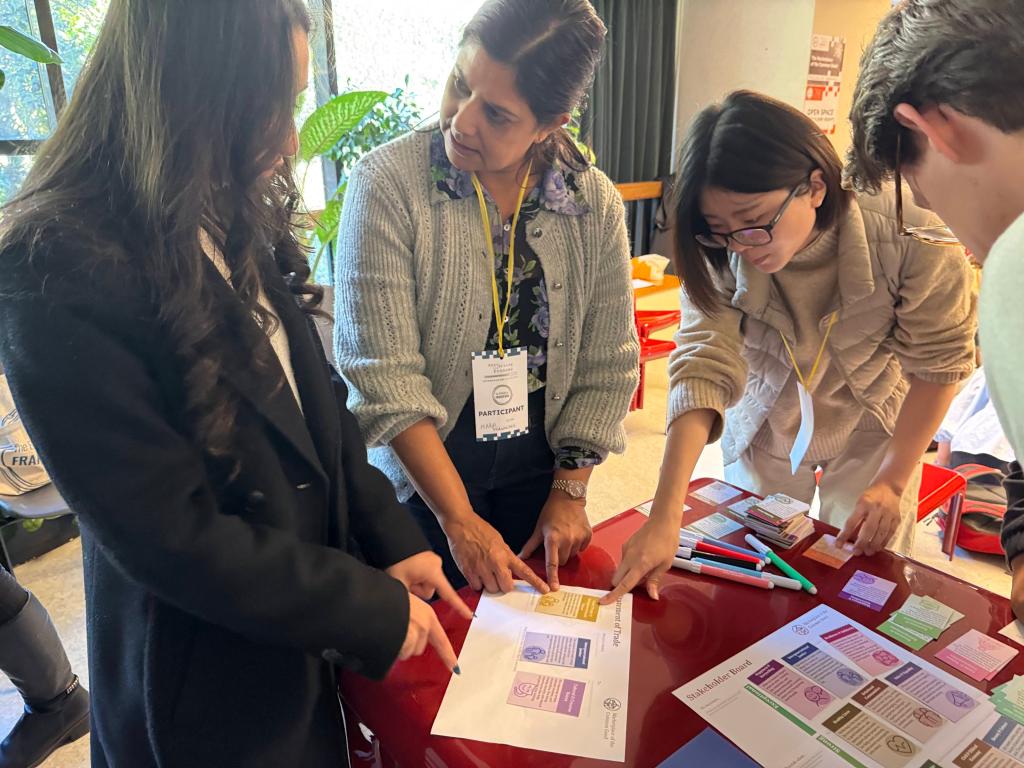
In another exchange, the cultural and creative voices team wanted to improve intergenerational justice, as older people’s voices were not often included. The older people and intergenerational voices team had valuable experience in this area. By creating shared spaces for older voices to be heard, both groups benefited.
At the same time, the older people and intergenerational voices team saw room for improvement in lifelong learning, a resource that health, care, and education professionals had in abundance. By offering learning opportunities in health settings, the teams found new ways to support older people.
By the end of the workshop, participants had developed seventeen ideas for policies to boost happiness, all captured in our Inclusive Map of Happiness.
To conclude, Lucy Anns, senior policy and advocacy officer at Caritas Europa, shared her insights in her report, Going Beyond Economic Growth. She explained that measuring progress only by GDP and focusing mainly on growth is a root cause of many social and environmental problems. Lucy presented Caritas Europa’s vision for a just economy, one that improves the social, ecological, political, economic, cultural and spiritual wellbeing of all people based on values of solidarity, simplicity and sufficiency.
The rest of the conference continued in the same spirit of engagement and collaboration, seamlessly blending art and music and moments of rest and reflection with lively debates, business and academic pitches; and even an EoF’s Got Talent show! This variety did not detract from the quality of the input; indeed, it was an essential part of it, demonstrating what a new economy should look like in practice.
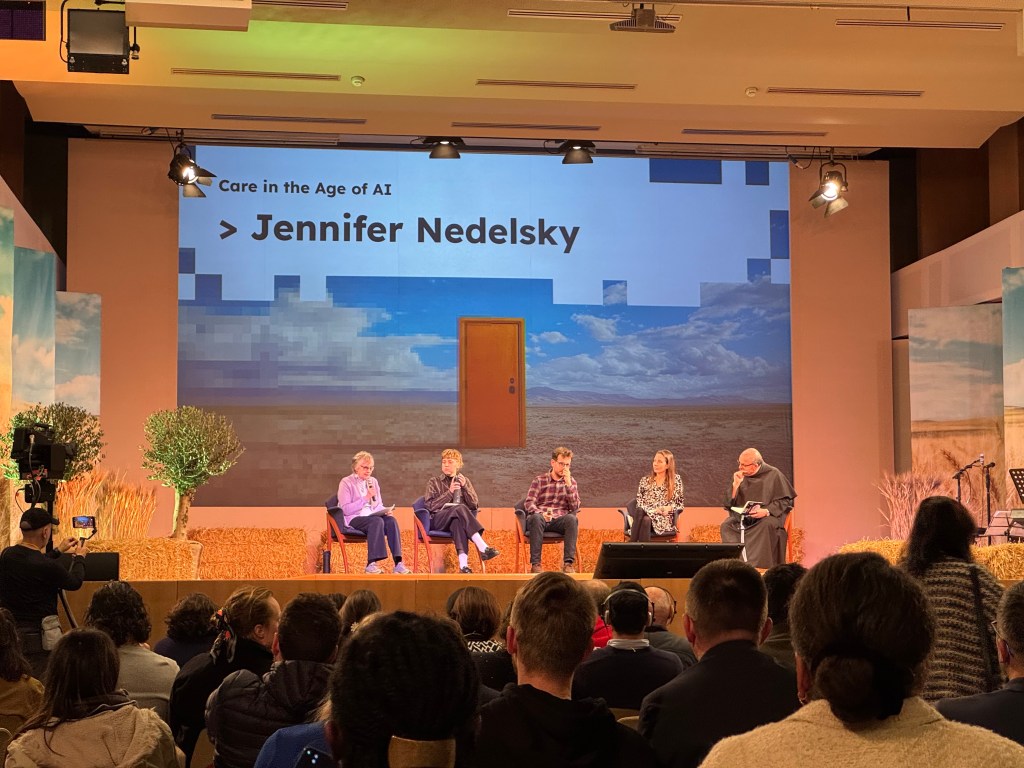
Some of the highlights for me included in-depth discussions about reclaiming “work” as a vocation that provides purpose, belonging, and long-term sustainability rather than merely an economic transaction. Equally significant were conversations around elevating the quality and status of care, which risks being reduced to a matter of efficiency or automation in an age of artificial intelligence. Instead, speakers called for care to be uplifted as a civic and ethical responsibility for everyone, as it is essential for strengthening connections between people. All in all, it was a most inspiring few days at Restarting the Economy!


You can follow all the sessions on the official Economy of Francesco YouTube.

 Economy of Francesco UK Hub