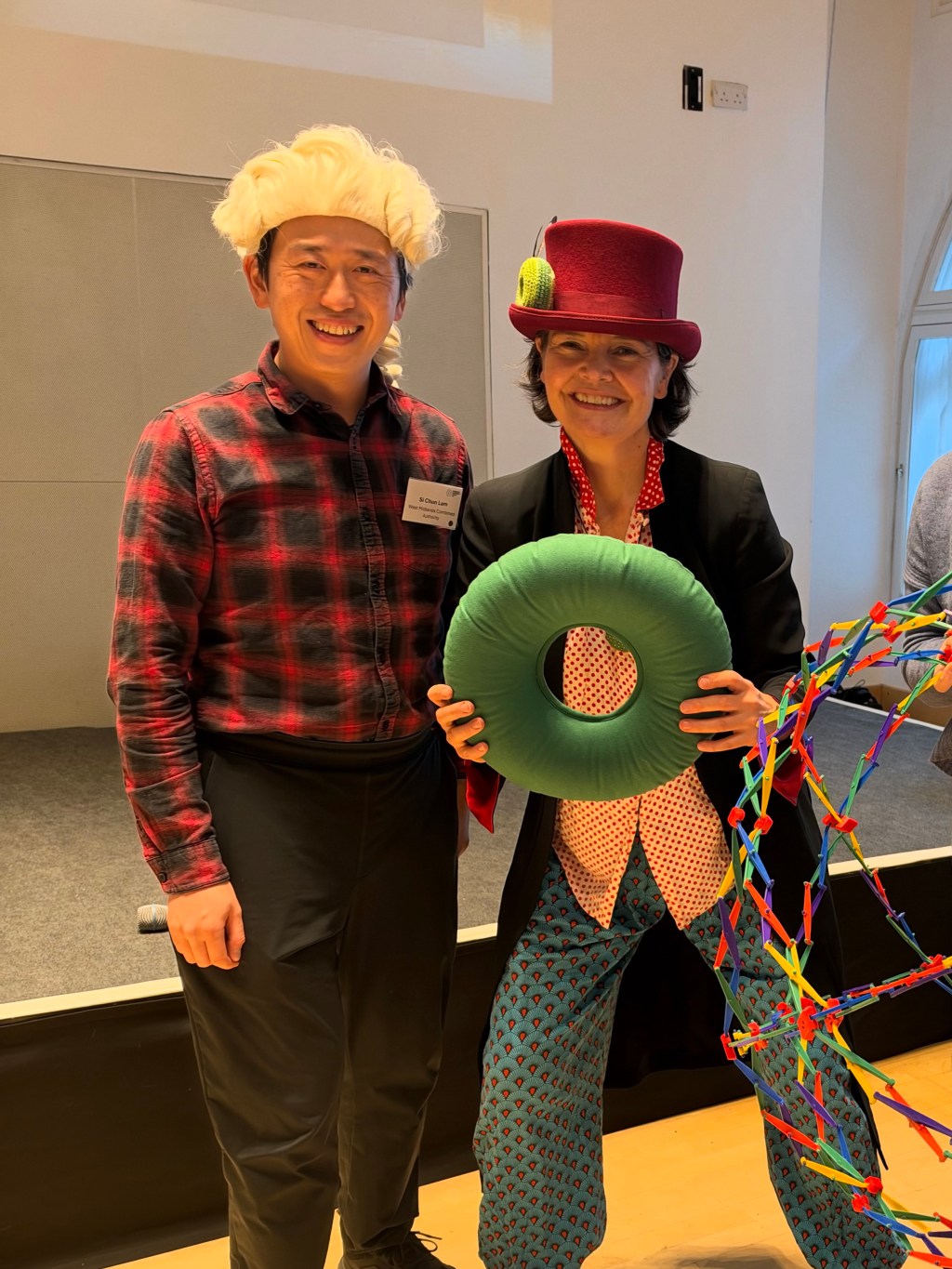
Last week, a colleague and I represented our city-region government, the West Midlands Combined Authority, at the third annual Doughnut Economics Action Lab Cities and Regions meeting in Glasgow. Co-organised with Glasgow City Council and the University of Glasgow’s GALLANT partnership, it brought together people from around the world working to put doughnut economics into practice.
Doughnut Economics has a long-standing relationship with the Economy of Francesco, with economist and author Kate Raworth, creator of the Doughnut and co-founder of Doughnut Economics Action Lab, having been involved with EoF since its inception, and online at the global gatherings in 2020 and 2022. It starts with a simple but demanding ambition: meet the needs of all people within the means of the living planet.
At the Cities and Regions conference, we had talks and workshops on how places are putting the principles of doughnut economics into their day-to-day practice; experienced a city tour conducted by a social enterprise employing tour guides with lived experience of homelessness; and, we even had a circus (more on that later)!
Since 2018, the West Midlands has adapted the doughnut to make it resonate with policymakers in an English context, using the doughnut economics concepts of a social foundation and planetary boundary, but focusing on what a mayoral strategic authority in an English city-region can do with its powers and levers.
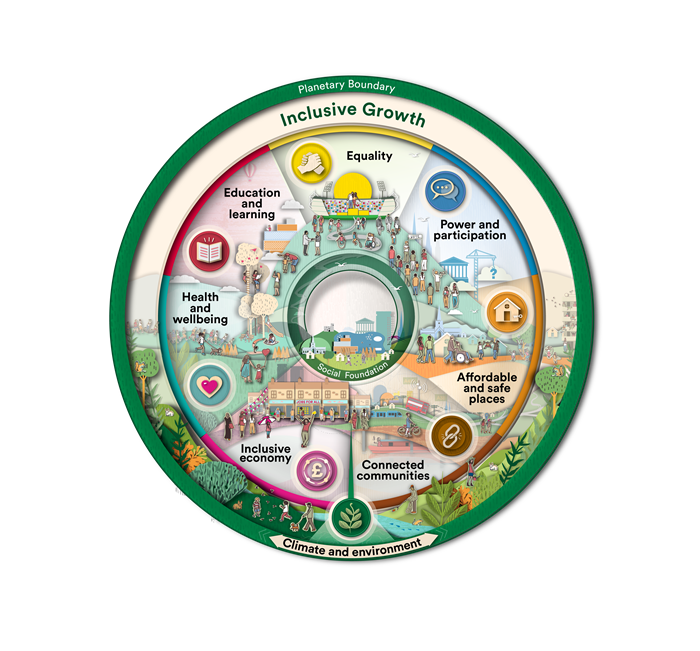
The conference was insightful, cathartic, and perhaps an unusual thing to say of a conference, most certainly joyful!
It was insightful to hear how city-regions are tackling the challenges we face. We are all building decision-making and verification tools to assess and evaluate whether strategies, programmes, projects, and interventions help us meet our social foundations while staying within our planetary boundaries. Others are pushing the art of the possible with input-output models that apportion global impacts to the city-region level. And many of us are also blending doughnut economics with other concepts too, from inclusive growth to wellbeing economics and community wealth building. And of course, this is also what we do in Economy of Francesco, drawing on experts and senior scholars from all over the world, and adapting their work to co-create our thematic villages like Policies for Happiness and regional hubs to make things work in our lived realities.
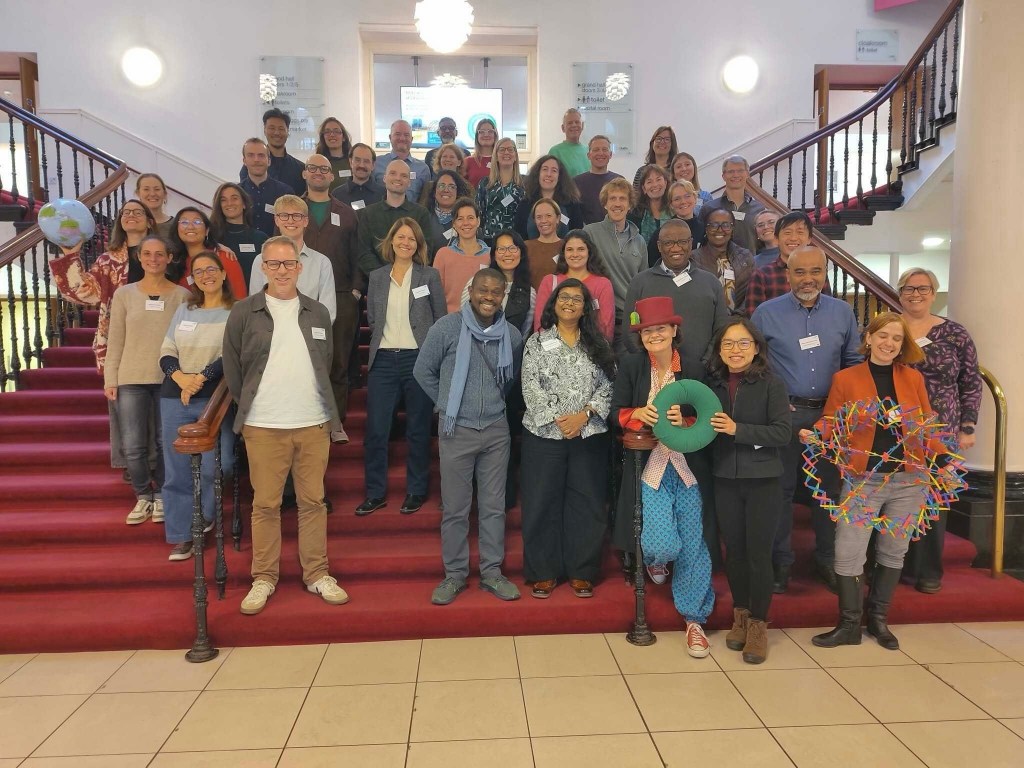
Next, it was cathartic to meet and work with people who understand the urgency of the climate and ecological crisis, who know how to work with more sceptical colleagues to push the envelope of what’s possible, and who recognise that policy is made in bold spaces of negotiation and not by retreating into safe echo chambers.
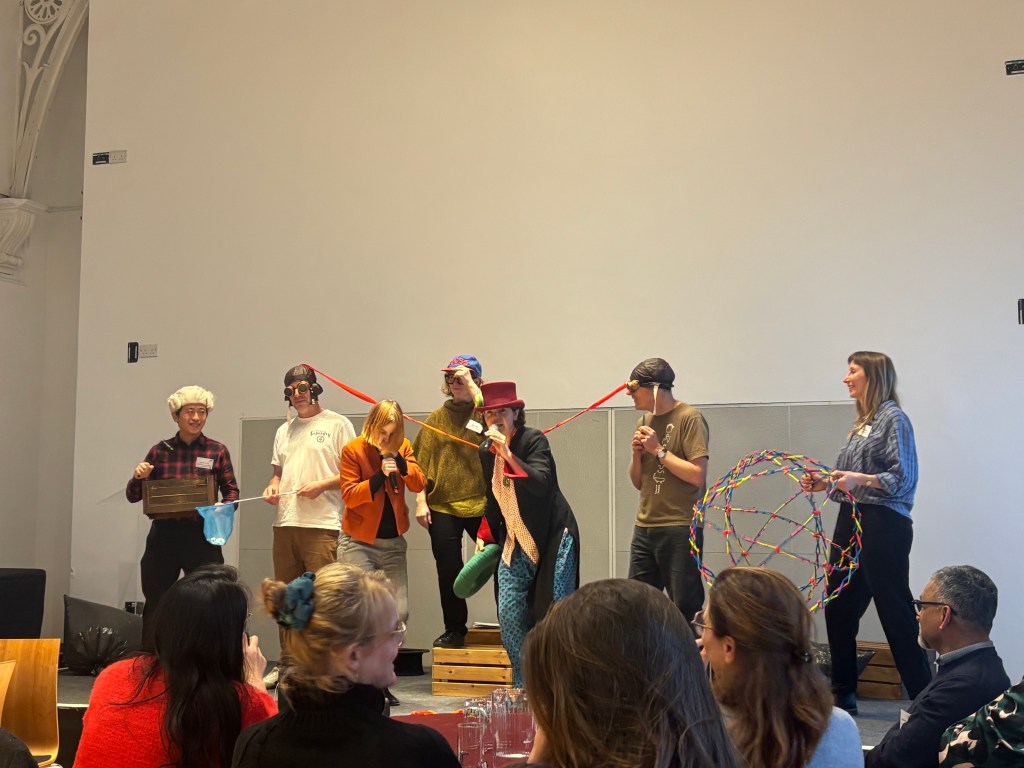
And finally, and most importantly, it was a joyful time: Kate Raworth brought her interactive and participatory Economics Circus show “How Rich Is Too Much?”, to explore what extreme wealth inequality, money, power, and what ‘enough’ means — with participants playing various roles, from Billy the billionaire to—well—me, playing the role of a judge! The topic was most serious, the technical work is important, but it was the circus that helps unlock the possibilities that allow us to create a safe and just space for humanity.
Using play and story to open up serious questions is something we’ve been experimenting with closer to home, too. Sometimes it’s as simple as breaking the rhythm: such as when it was my turn to chair a routine meeting, and I turned it into a game show to put colleagues into a different mind space. Other times it can be much more ambitious, for instance, University of Birmingham’s Local Policy Innovation Partnership Hub’s commission of Stan’s Cafe theatre company on At Home with the Green Book, translating the Treasury’s investment appraisal rules into a family sitcom. Or, of course, with the Economy of Francesco’s Policies for Happiness Village, the academic foundations and framing are translated into an interactive workshop, the Marketplace of the Common Good. This isn’t about trivialising the work nor making it flashy, but it creates a recognisable space where people can see the human trade-offs behind the spreadsheets, question the assumptions, and feel that they are able to join in.
For all of us working to build thriving places within our planetary boundaries, whether we are economists, entrepreneurs, changemakers, or policymakers, the lesson Kate Raworth brought home in her lecture on the “non-technical ingredients for a successful transition” is vital: rigorous evidence and technical craft show us what is possible, but it is stories, humour, and collective imagination that help invite people in to build it with us.

